DataKnobs

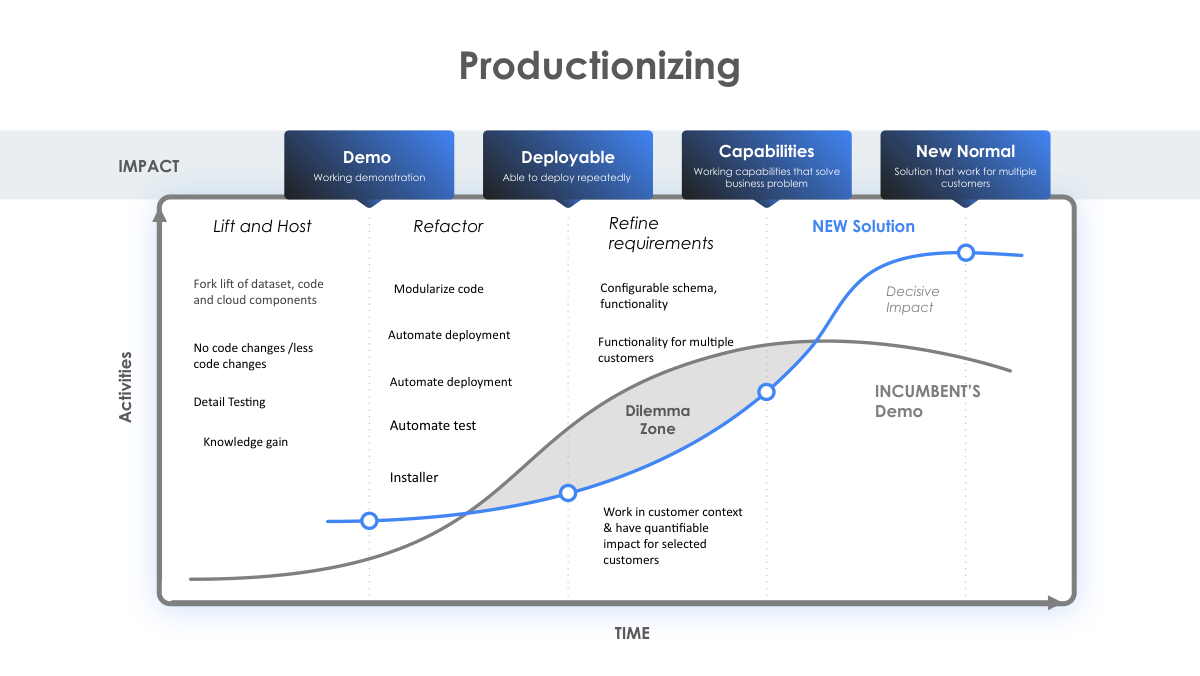
Productionizing

Working in a notebook and trustworthy in production are different claims.

A model that predicts correctly on a held-out test set has cleared one bar. Being trustworthy in production means it keeps clearing that bar on data it's never seen, under load, for people who aren't its author, long after the person who built it has moved to something else. Almost none of that is a modeling problem.

Opening slide of a presentation on productionizing machine learning models
Title slide from the source deck. It carries its own text, so it opens full size in a new tab rather than being read at page scale.

The gap

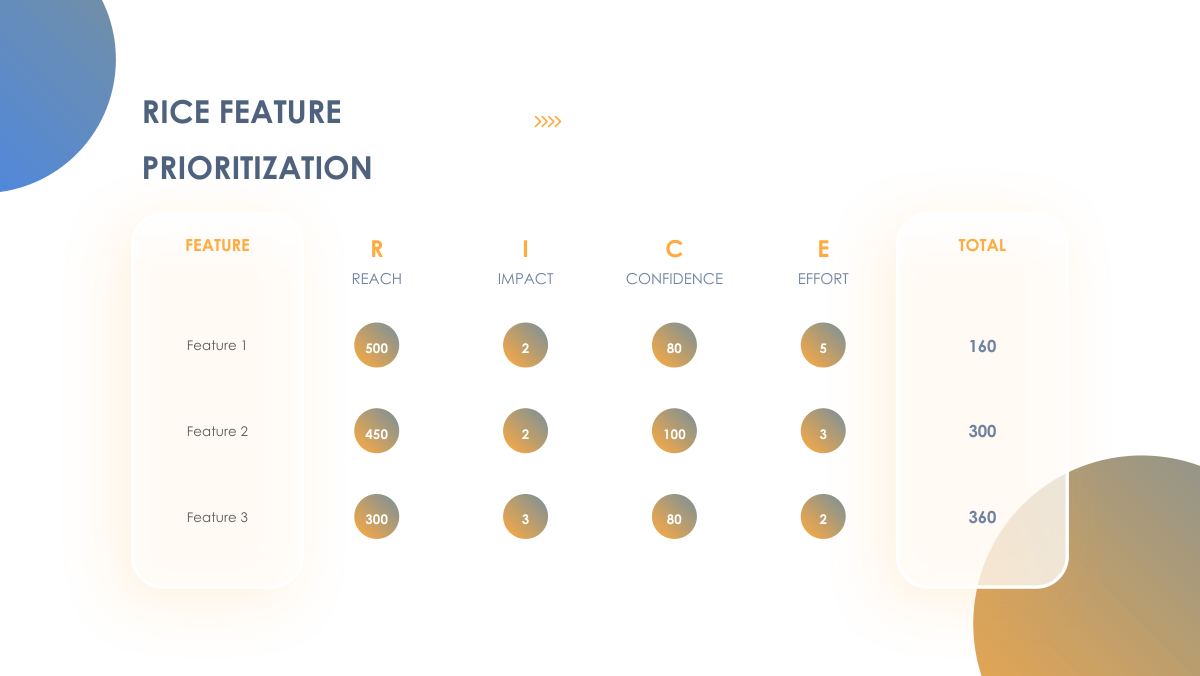
Seven concerns, not one deployment step

"Productionize it" sounds like a single action — wrap the model, ship it, done. In practice it's seven separate concerns that all have to hold at once, and a model can fail in production while every one of them looks fine except the one nobody checked.

None of these are exotic. They're the same concerns every piece of production software has — reproducibility, packaging, serving, testing, monitoring, rollback, ownership. What's specific to ML is that the thing being shipped can degrade silently, on inputs it was never tested against, without throwing a single error.

01

Reproducibility

Code, data, and environment pinned well enough that the exact result can be regenerated — not approximated, regenerated. A model that only ever ran once, on its author's laptop, with whatever package versions happened to be installed that week, isn't a production asset yet. It's a demo that hasn't failed in front of anyone else.

This is what makes debugging a regression, auditing a decision, or safely retraining possible at all. Skip it and every later stage inherits an artifact nobody can fully explain.
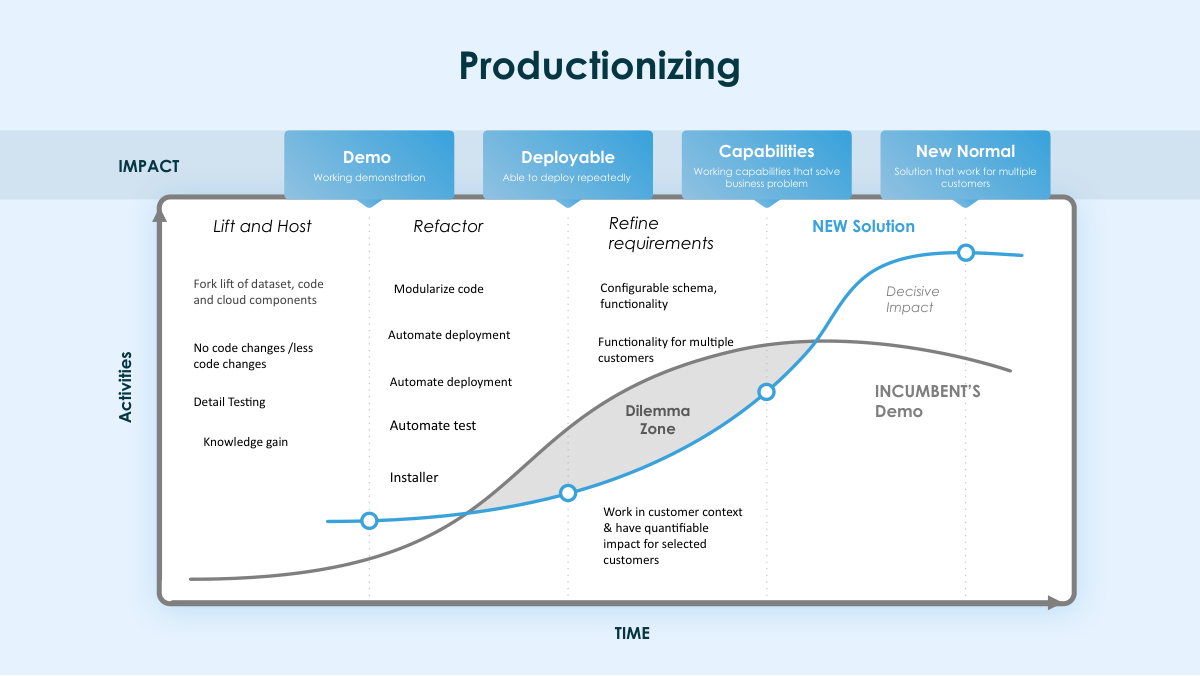
Slide illustrating reproducibility in the productionizing process
02

Packaging

Freezing dependencies into a single deployable artifact — a container image, a locked environment — so "works on my machine" stops being a meaningful distinction from "works in production." The model, its preprocessing, and its exact library versions travel together.

The failure mode this prevents is mundane and extremely common: a notebook's implicit environment silently diverging from the serving environment until a dependency update changes behavior nobody asked for.

Slide illustrating packaging in the productionizing process
03

Serving

Choosing batch or online inference, and designing for the latency and throughput the use case actually needs — a fraud check has a millisecond budget; a nightly report doesn't. This decision shapes almost everything downstream, including which failures even matter.

Getting it wrong doesn't usually look like an outage. It looks like a model that's technically live but too slow to be useful, quietly routed around by whatever team it was meant to serve.

Slide illustrating serving architecture in the productionizing process
04

Testing

Unit and integration tests catch broken code. Shadow and canary deployments catch something code tests can't: a model that's technically correct but wrong for production — run it alongside the current model on real traffic first, or let it serve a small slice with a fast way to pull it back.

A model that's never faced real traffic before its full rollout is still, in an important sense, untested — however clean its offline metrics looked.

Slide illustrating testing and canary deployment in the productionizing process
05

Monitoring

Uptime monitoring tells you the model is running. It says nothing about whether the model is still right. Data drift — the inputs shifting away from what the model was trained on — and concept drift — the correct answer itself changing — both degrade a model that never once threw an error.

This is the stage most often confused with "it hasn't crashed." A model can be perfectly available and quietly wrong for weeks before anyone notices, if nothing is watching the distribution of its inputs and the shape of its predictions.

Slide illustrating monitoring and drift detection in the productionizing process
06

Versioning & rollback

A model registry that tracks which exact version is live, and a rollback path that's actually been tested — not just assumed to work — before it's needed under pressure. The value of a rollback plan is entirely in whether it was exercised before the night something breaks.

Teams that skip this discover the gap at the worst possible time: mid-incident, trying to reconstruct which version was last known good while a rollback script fails for reasons nobody anticipated.

Slide illustrating versioning and rollback in the productionizing process
07

Ownership

Who gets paged when the model degrades, and who is actually authorized to pull the rollback trigger without waiting for a meeting. Without an explicit answer, both questions get resolved live, during the incident, by whoever happens to be online — which is a worse time to decide either one.

Ownership is the stage every other stage depends on being real. A monitoring alert nobody is on call for is indistinguishable from no monitoring at all.

Slide illustrating ownership and incident response in the productionizing process

Signature tool

Would this actually get caught?

Pick a failure scenario, then toggle which of the seven safeguards your team actually has in place. The verdict reflects whether that specific failure would surface before a customer noticed — not whether your team is doing MLOps "well" in general.

Pick a scenario
Your team's safeguards
Reproducibility
Packaging
Serving design
Testing (canary/shadow)
Monitoring
Versioning & rollback
Ownership
SHIPS SILENTLY

No safeguards toggled on yet. This scenario would reach customers before anyone on the team knew.

Getting it wrong

How teams find out the hard way

Treating uptime as health

A model that's up and a model that's right are different claims. Only monitoring the first means the second can fail silently for weeks.

An untested rollback plan

A rollback script nobody has run isn't a rollback plan — it's a hypothesis, and the incident is a bad time to test a hypothesis.

No named owner for alerts

Monitoring without an on-call answer just moves the failure from "undetected" to "detected and ignored," which isn't much of an improvement.

Full rollout with no canary

Skipping a small real-traffic slice before full rollout means the first real-world test of a new version is every user at once.

Questions

Common questions

What does productionizing a model actually mean?

Closing the gap between a model that produces correct output once, on a known dataset, in a notebook, and one that keeps producing trustworthy output continuously, on unseen data, while people who aren't its author are responsible for it. Most of the work is reproducibility, packaging, serving, testing, monitoring, versioning, and ownership — not modeling.

What is the difference between data drift and model drift?

Data drift is the input distribution changing — the world the model sees has shifted from what it was trained on. Model (or concept) drift is the relationship between input and correct output changing, so the same input now deserves a different answer. The fix usually differs: retraining on new data versus re-examining whether the target itself has changed meaning.

Why does reproducibility matter if the model already works?

Because "works" was observed once, on one machine, with one set of dependency versions, and nobody can debug a regression, audit a decision, or safely retrain without regenerating that exact result. A model that only ever ran on its author's laptop is a demo, not a production asset.

What is a canary or shadow deployment?

A shadow deployment runs the new model alongside the old one on real traffic without acting on its output, so behavior can be compared safely first. A canary deployment lets the new model serve a small slice of real traffic, with a fast way to pull it back, before a full rollout.